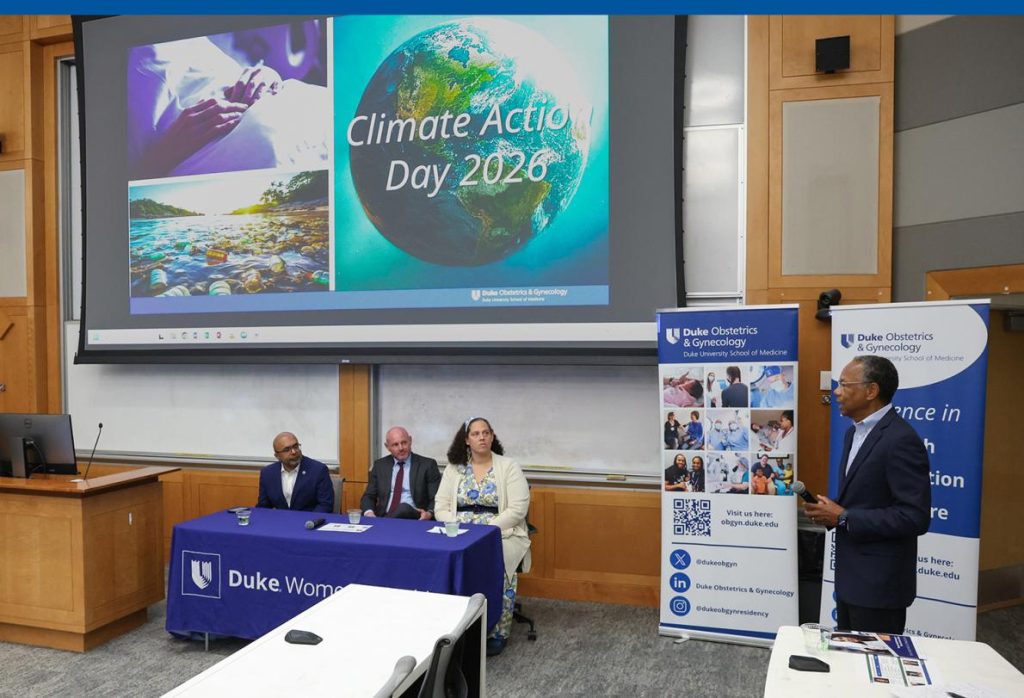
At Breastfeed Durham, we know that the health of our planet is inextricably linked to the health of our parents and babies. On April 22, 2026, members of our community gathered for Duke University’s second annual Climate Action Day. The event focused on a critical theme: Building Resilience in Communities.
As we face rising temperatures and more frequent environmental shifts, the conversations held at this event highlighted why our work in breastfeeding advocacy is more important than ever.
The Impact of Extreme Heat on Families
Keynote speaker Dr. Ashley Ward from the Duke Heat Policy Innovation Hub delivered a sobering reminder: extreme heat is a reproductive health crisis. Pregnant people are more vulnerable to heat-related illnesses, which can lead to complications during pregnancy and birth.
For many in our Durham community, this is compounded by energy poverty. Families are often forced to choose between paying for air conditioning to stay safe or purchasing essential groceries and medication. Resilience means ensuring that every family has a “cool” place to thrive, regardless of their zip code.
Breastfeeding as a “Universal Buffer”
One of the most powerful moments of the day came from Love Anderson, co-founder of Breastfeeding Family Friendly Communities. She reminded attendees that in times of climate-related disasters—like the recent impacts of Hurricane Helene—infant feeding becomes a “life-safety” issue.
When the power goes out and clean water is unavailable, breastfeeding serves as a universal buffer. It provides:
- Security: A safe, ready-to-go food source that doesn’t require electricity or clean water.
- Immunity: Essential antibodies that protect infants from illnesses that often spread during disasters.
- Sustainability: A zero-waste feeding method that doesn’t contribute to the environmental footprint.
How We Build Resilience Together
The event emphasized that “resilience” isn’t just about individual strength; it’s about community systems. To protect our families, we must:
- Integrate Heat Safety into Care: Encouraging providers to talk to families about heat risks during prenatal visits.
- Support Sustainable Healthcare: Duke is leading the way by reducing medical waste, such as moving away from single-use plastics in clinics.
- Cross-Sector Collaboration: Connecting housing, labor, and healthcare to ensure that the most vulnerable among us are not left behind during weather extremes.
Moving Forward
Climate action is health action. By supporting breastfeeding, we are not only nurturing the next generation but also participating in a sustainable practice that helps our community remain resilient in an ever-changing world.
Let’s keep the conversation going. How can we better prepare our neighborhoods for extreme heat? How can we ensure every new parent has the support they need to provide that “universal buffer” for their child?
Read More: For the full recap of the event and the speakers involved, read the original article from the Duke Department of Obstetrics and Gynecology: Climate, health and well-being: Building resilience in communities.