Most emergencies are small. A house fire, an eviction, a power cut, a breakdown on the highway with a cooler of milk in the back. They do not make the news, but they separate a baby from a feeding plan just as surely as a hurricane does. And the people who catch them are usually already in the house: home visitors, doulas, community health workers.
On September 28 at Book Harvest, Love Anderson and Rachel Fann trained Durham’s home visitors and direct service staff, including Healthy Families Durham, Family Connects Durham, and Early Head Start home-based staff, on safe infant feeding in these micro-emergencies. The SAFE Infant Feeding Team built a page so nothing from that morning gets lost.
One page, one short address
Everything lives at safeinfantfeeding.org/durham:
- How to feed a baby safely when there is no power or clean water, including preparing formula and cleaning bottles with a cold sanitation kit
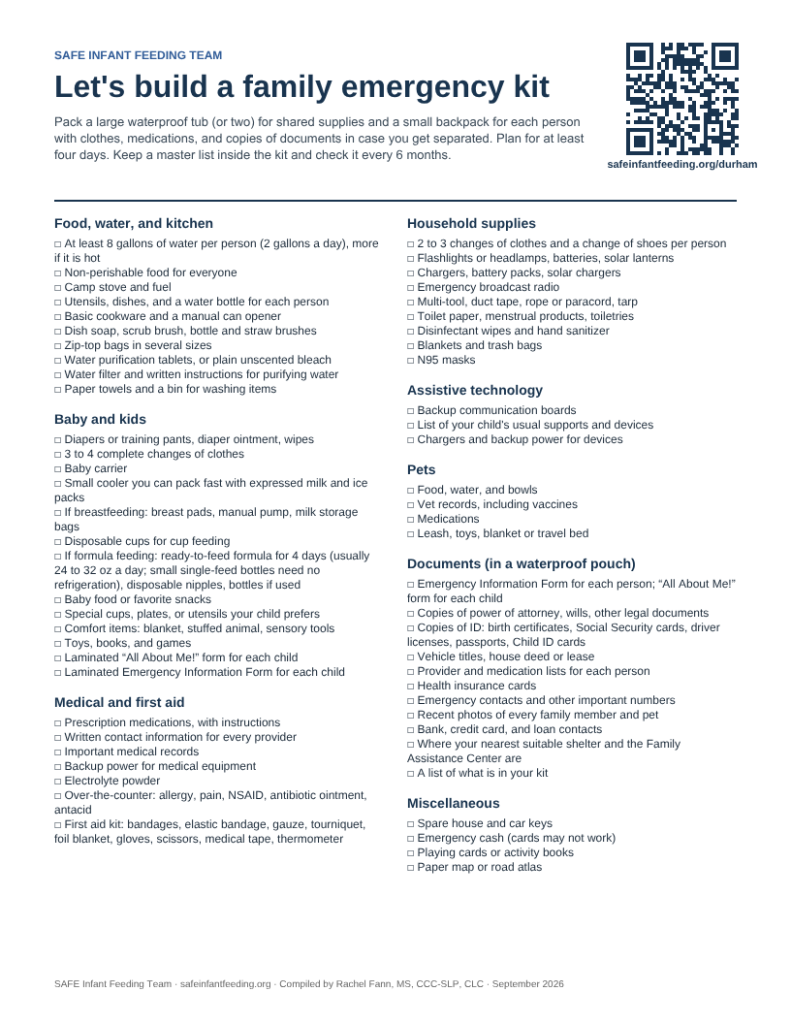
- A one-page family emergency kit checklist, in English and Spanish
- How to sign up for Alert Durham, and who to call if someone in your home would need help evacuating
- How to stay together, with a family code word and a plan your child’s caregivers know
- Free emergency child care from the National Emergency Child Care Network for any family in a disaster or a personal crisis
Home visitors: the page has a printable one-page resource list for your visit bag, in English and Spanish, with a QR code back to the page.
Share it with the families you serve, and with your own family. The best time to pack the kit is a quiet week.
Resources compiled by Rachel Fann, MS, CCC-SLP, CLC. The SAFE Infant Feeding Team is the emergency arm of Breastfeeding Family Friendly Communities, the organization behind Breastfeed Durham.